
Our review as part of the RAPID AMOC AGU special issue has now been published in Paleoceanography and Paleoclimatology
Moffa‐Sánchez, P., Moreno‐Chamarro, E., Reynolds, D. J., Ortega, P., Cunningham, L., Swingedouw, D., Amrhein, D. E., Halfar, J., Jonkers, L., Jungclaus, J. H. Perner, K., Wanamaker, A. and Yeager, S. 2019. Variability in the Northern North Atlantic and Arctic Oceans Across the Last Two Millennia: A Review. Paleoceanography and Paleoclimatology 10.1029/2018PA003508.
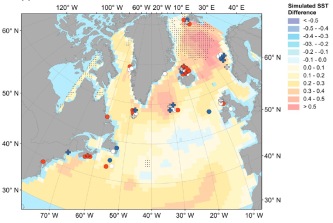
https://agupubs.onlinelibrary.wiley.com/doi/epdf/10.1029/2018PA003508

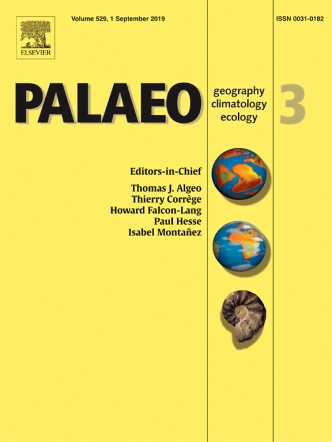 Our New paper investigating the application of carbon and oxygen isotopes derived from the long-lived marine bivalve mollusc Glycymeris glycymeris has now been published in Palaeogeography, Palaeoclimatology, Palaeoecology (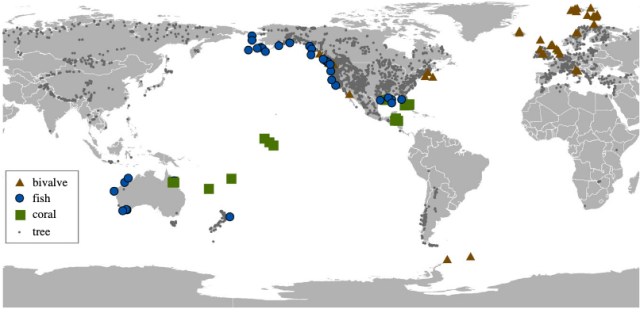
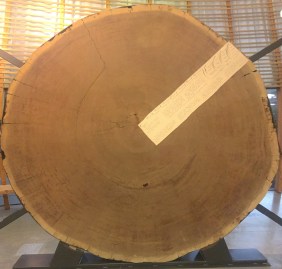 I have now moved institutes, leaving the School of Earth and Ocean Science at Cardiff University where I have been placed for the last five years. I have joined the Laboratory of Tree Ring Research (LTRR) at the University of Arizona. I am working with Prof. Bryan Black to set up a new sclerochronology facility within the LTRR. I will be working on developing novel multi-proxy reconstructions of Pacific decadal variability using marine molluscs and terrestrial archives derived from tree rings.
 David J Reynolds